The World According to Bensenhaver
The World According to GarpThe World According to Bensenhaver is a novel by T. S. Garp that makes the desire to protect loved ones both its central conflict and its danger. Through Dorsey Standish’s escalating anxiety, the book imagines how fear can deform care into surveillance and control; through its cover and publicity, it also becomes a battleground over whether a novel should be read as fiction or as an account of its author’s life.
Premise and Plot
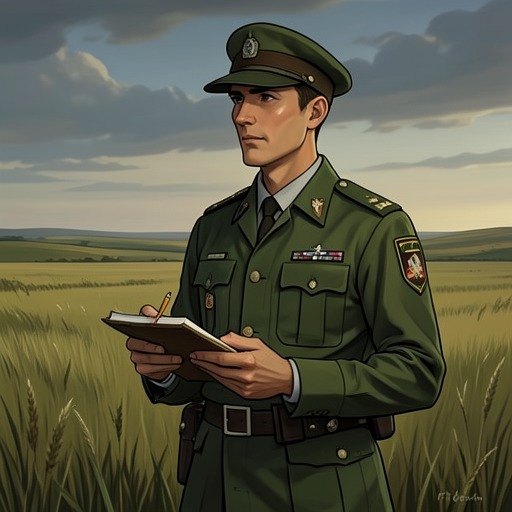
The novel centers on Dorsey Standish’s impossible wish to protect his wife and child from the brutal world. After Arden Bensenhaver is forced to retire from the police for repeatedly unorthodox arrests, Dorsey hires him to live with the family as an armed guardian. He is meant to protect Hope and their son, Nicky, but his watchfulness is never simple reassurance: Bensenhaver is aloof, haunted by terrible memories, and increasingly seems as threatening as the dangers he is supposed to keep away.
Hope rejects the arrangement and insists that Bensenhaver not live in their home. Dorsey nevertheless continues to support the retired policeman from a distance, including paying him to follow Nicky. After Hope insists on having a second child, Dorsey becomes less preoccupied with possible attacks on his wife and children, only to grow suspicious that Hope is having an affair. He recognizes that her infidelity might wound him more deeply than another assault, and begins to doubt both his love for her and his own capacity to trust. When Bensenhaver refuses to spy on Hope, explaining that his job is to protect the family from the outside world rather than restrict its freedom, Dorsey panics. He leaves his children without protection one night to watch his wife himself.
The novel’s violence ultimately overwhelms Dorsey’s scheme of vigilance. Bensenhaver becomes thoroughly mad and is taken away; Hope is pregnant with her lover’s child. At the birth, Nicky is twelve and feels the family’s tension lift. Hope and her children continue living, even visiting Bensenhaver in a home for the criminally insane. His nightmarish accounts, once a source of dread, become tolerable and eventually comic to Hope. Their visits express kindness, but also help the family recognize and cherish its own sanity.
Fear, Protection, and Survival
Bensenhaver’s role shifts from hired protector to an uneasy presence whose own memories and distance from ordinary life make him seem menacing. The novel describes him as “a lurker at the last edge of light—a retired enforcer, barely alive on the rim of darkness.” His shadowed image captures the contradiction of Dorsey’s plan: the household’s defense against danger brings danger closer, and the guardian’s vigilance cannot make the family invulnerable.
Dorsey and Bensenhaver are both described as poorly suited to life in a vulnerable world, though for different reasons. Bensenhaver’s view is not simply false or mistaken; it is out of proportion to the world’s capacity for sensual pleasure and warmth. Dorsey’s fear, by contrast, grows from how delicately he loves his wife and children. His anxiety turns that attachment into an attempt to monitor the people he wants to protect, until care threatens the freedom and intimacy it was supposed to preserve.
Hope’s endurance provides the novel’s counterweight to the men’s fear. After surviving brutality, she insists on the possibility of another child and continues with her family after Dorsey’s anxiety has ended. The narrative suggests that women may be better equipped than men to endure fear and brutality and to contain the vulnerability that comes with loving others. Hope emerges as a survivor in a world that has repeatedly exposed her to harm; her persistence, and the survival of her children, leave open the possibility of a life not governed by Dorsey’s dread.
Publication and Interpretation
The novel’s meaning is also shaped by the way it is sold. Garp’s editor, John Wolf, takes control of the book jacket after finding Garp’s own description ponderous and glum. Wolf’s jacket copy summarizes the plot as a warning about a fearful man whose attempt to protect his loved ones creates such tension that disaster becomes almost certain. It then identifies Garp as Jenny Fields’s only child and a father who has recently lost a five-year-old son, presenting the novel as emerging from a father’s anguish after an accident.
That publicity makes personal grief an explicit selling point, although Garp regards it as the cheapest reason to read a book. He dislikes questions about how much of his fiction is “true,” meaning how much derives from real life. For him, the autobiographical basis of a novel, if it has one, is its least interesting level: fiction is an act of imagining truly and selecting from experience, not simply converting hardship into literary value. The flap therefore creates a sharp tension between the novel’s invented account of a family and the biographical facts Wolf uses to attract readers.
The cover intensifies that tension through a photograph of an ambulance unloading a small, covered body at a hospital. Its grainy, newspaper-like quality makes the image seem to represent any catastrophe or small death, yet for Garp it recalls the sight of Walt broken after the accident. The back cover compounds the injury: it reproduces a family photograph Garp had sent Wolf instead of a Christmas card, showing Garp with Duncan and Walt on a dock in Maine years before the accident. Helen, who took the photograph, never absorbs the cover’s image and never forgives Wolf for using either photograph. The marketing turns a private family image and a painful memory into public packaging for the novel.
Narrative Significance
The book’s fictional plot and its publication history mirror one another without becoming interchangeable. In the novel, Dorsey’s fear of losing his family distorts his protection of them; outside it, Wolf’s publicity frames Garp’s fiction through the real loss that Garp resists having treated as its explanation. Both strands ask what happens when intimate pain is made to govern another person’s choices: Dorsey tries to govern Hope, while the jacket invites readers to judge a work through its author’s grief.
The contrast also clarifies the novel’s refusal of a simple equation between experience and art. Its story gives fear and brutality full force, but does not let them define the whole world: Hope and her children survive, and the former guardian’s raving becomes, at last, something they can meet with compassion and even humor. The title’s imagined world is dangerous not because danger is unreal, but because danger becomes the only measure of life when fear loses all proportion to warmth, pleasure, and the freedom of those one loves.